Kerala history & heritage
Spice traders, kingdoms, temples, synagogues and forts — the story behind the places you will visit, and what to know before you go in.
The spice coast
For more than two thousand years, Kerala’s black pepper, cardamom and cinnamon drew traders across the sea. The ancient port of Muziris, near present-day Kodungallur, traded with Roman, Greek, Arab and later Chinese merchants. Roman coins are still found in the region today.
The early Chera dynasty ruled much of this coast in the first centuries CE, and the trade brought ideas and faiths as well as money.
Where many faiths arrived early
Kerala’s Christian community traces its origins to the first century, by tradition to the apostle St Thomas. Jewish traders settled here too; the Paradesi Synagogue in Kochi, built in 1568, is one of the oldest active synagogues in the Commonwealth.
Islam is said to have arrived with Arab traders, and local tradition holds that the Cheraman Juma Masjid near Kodungallur is among the oldest mosques in India. Historians debate the exact dates, but the story of these faiths living side by side is central to how Kerala sees itself.
Vasco da Gama, and the Europeans
In 1498 the Portuguese navigator Vasco da Gama landed at Kappad, near Kozhikode (Calicut), opening a sea route from Europe to India. The Portuguese were followed by the Dutch in the 1600s and the British in the 1700s, each leaving churches, forts and buildings you can still walk through.
Travancore, Kochi and the Malabar coast
For centuries the region was divided. In the south, the kingdom of Travancore ruled from Thiruvananthapuram; in the middle, the kingdom of Kochi; and in the north, the Malabar region came under the Zamorins of Kozhikode and later direct British rule.
After Indian independence in 1947, Travancore and Kochi merged, and on 1 November 1956 the Malayalam-speaking areas were brought together as the state of Kerala. 1 November is still celebrated as Kerala Piravi, Kerala’s birthday.
Living art forms
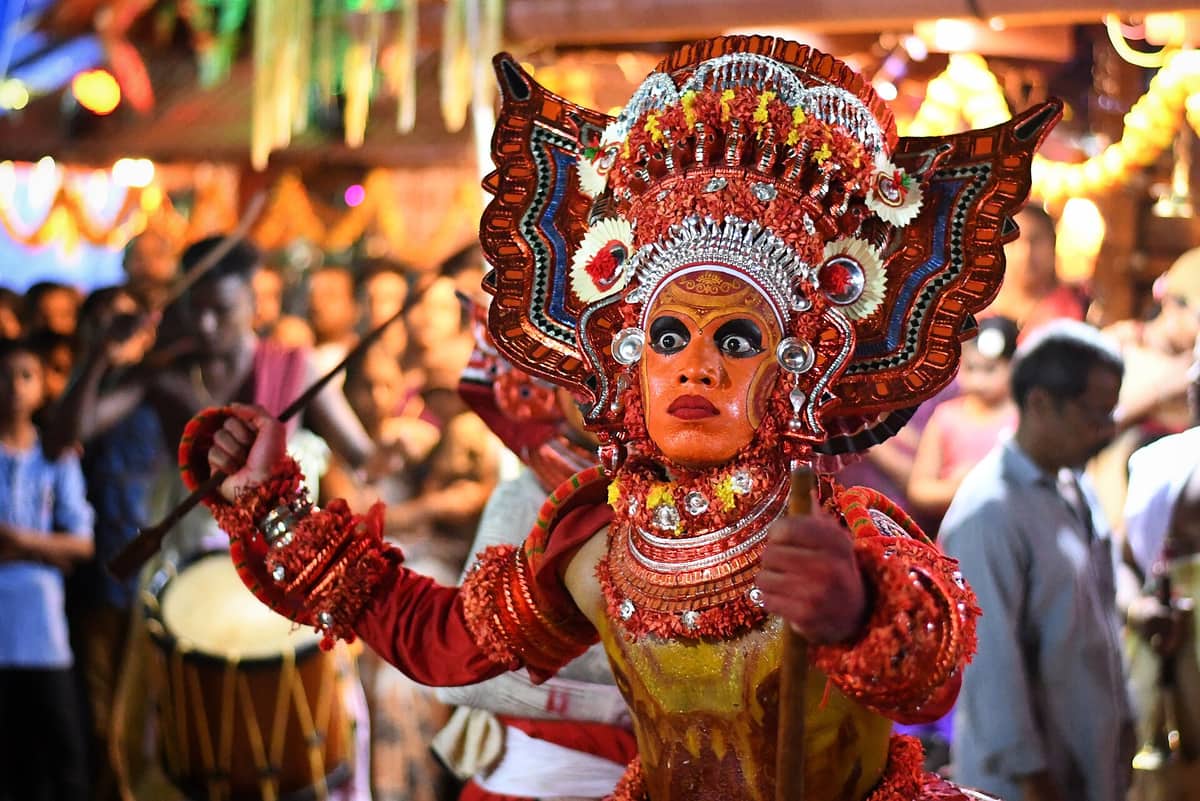
Kathakali is classical dance-drama with extraordinary painted faces and costumes, telling stories from the epics. Short evening performances for visitors run in Kochi most days.
Theyyam is a ritual performance from northern Kerala in which performers are believed to embody deities. The main season runs roughly December to April, mostly in Kannur and Kasaragod; watching is welcome, but it is a religious event, not a show.
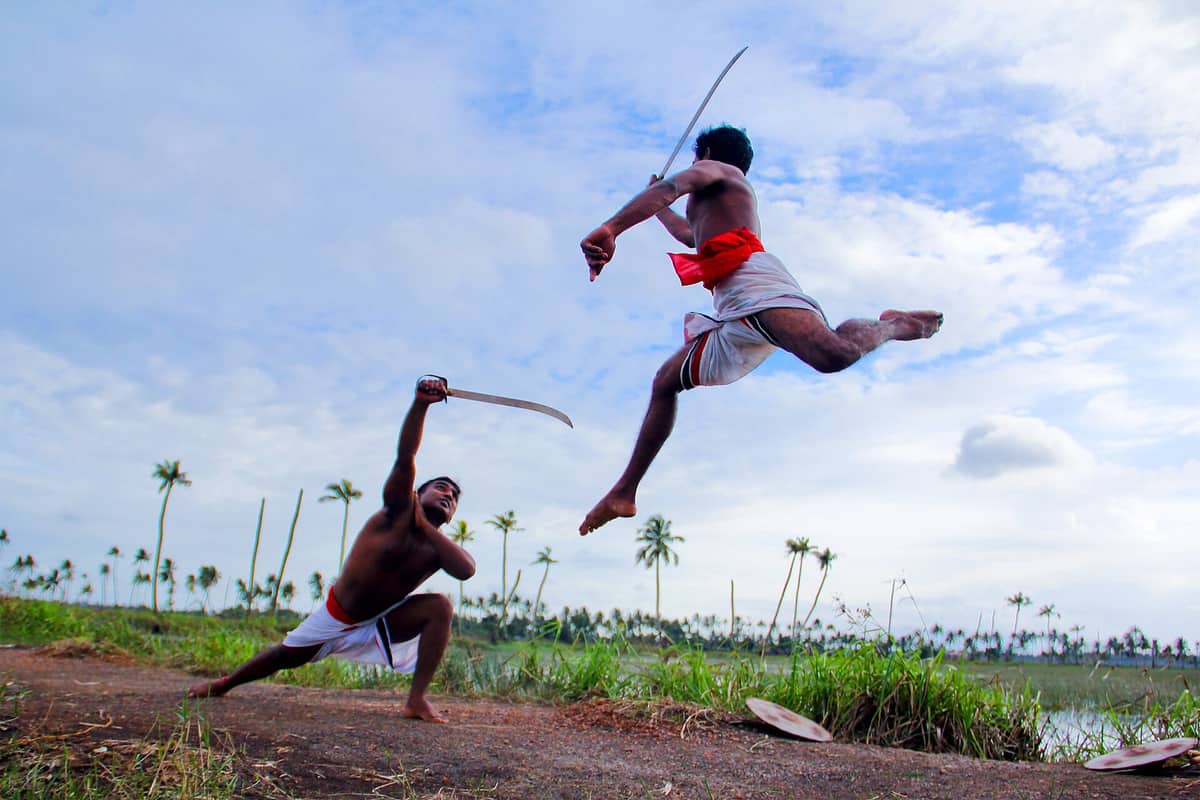
Mohiniyattam is a graceful classical dance, and Kalaripayattu one of the oldest martial arts in the world — demonstrations are common in Thekkady, Munnar and Kochi.
In August, the Nehru Trophy snake boat race on Punnamada Lake near Alleppey sees boats with around a hundred rowers each race to the beat of songs.
Historic places to visit
Opening days and entry rules change, so we confirm them for your dates when we plan your trip.
Sree Padmanabhaswamy Temple
Thiruvananthapuram
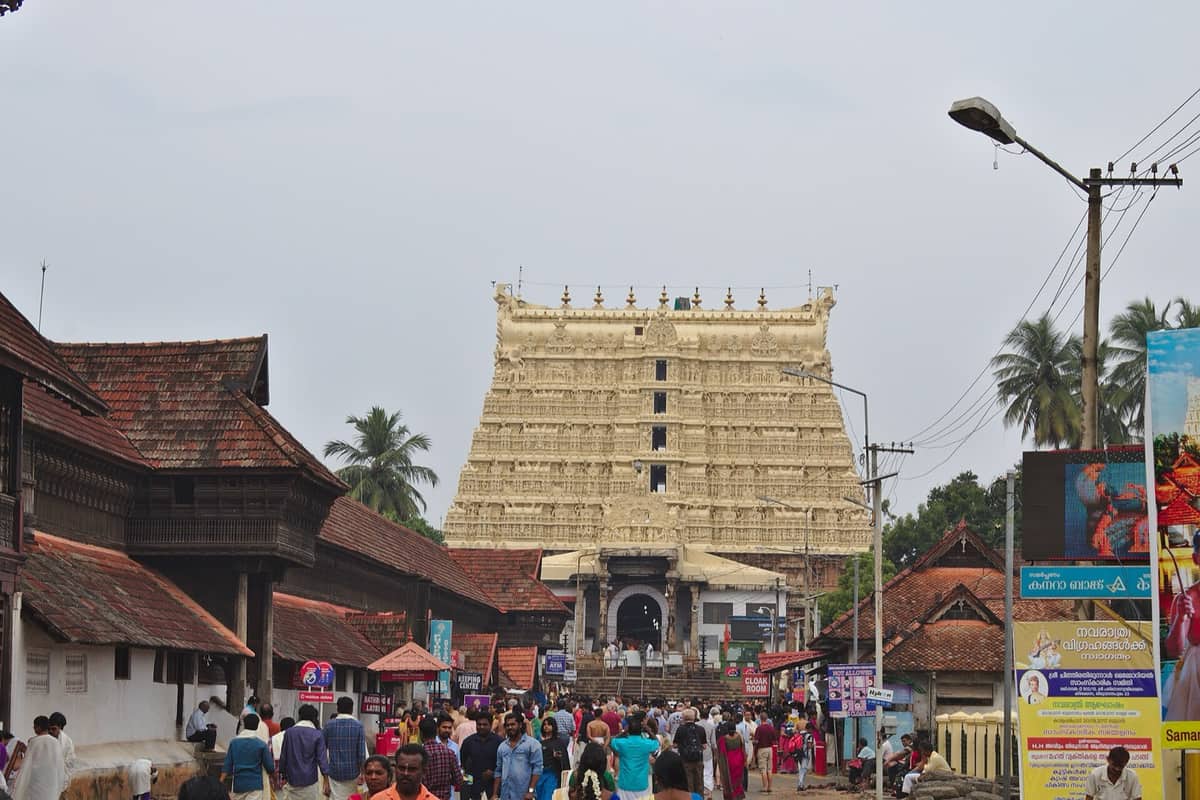
A magnificent temple dedicated to Vishnu, with a towering gopuram (gateway tower) and centuries of history as the royal temple of Travancore. It drew worldwide attention in 2011 when long-sealed vaults were found to hold an immense treasure.
When you visit: We plan this as a visit from outside: the seven-storey gateway tower, the temple tank and the old streets of East Fort around it, best in the early morning or at dusk. Dress modestly and keep photography respectful.
Mattancherry Palace (the Dutch Palace)
Kochi
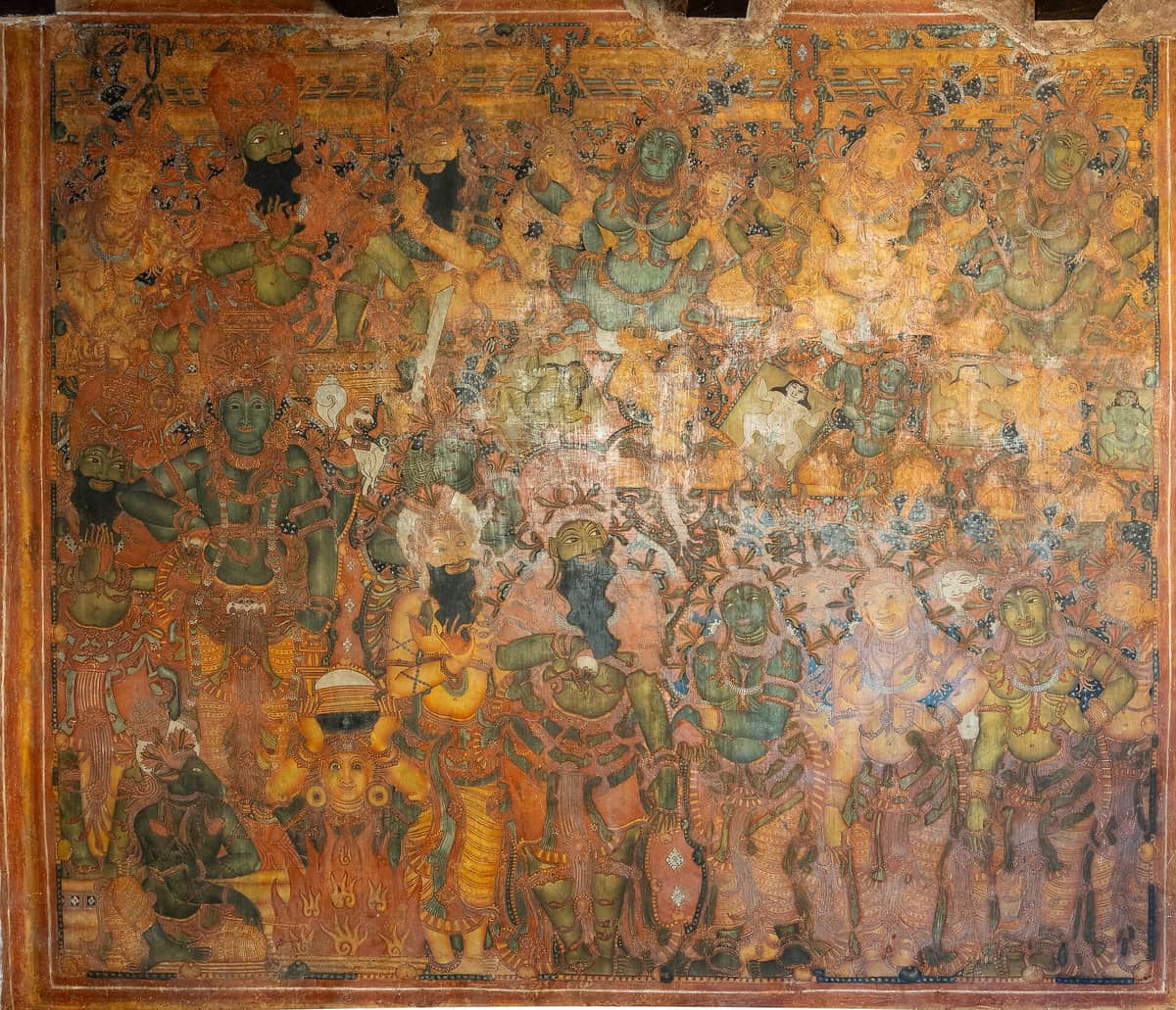
Built by the Portuguese around 1555 as a gift to the Raja of Kochi, and later renovated by the Dutch — hence the name. Inside are some of the finest Hindu temple murals in Kerala, and portraits of the Kochi rajas.
When you visit: Usually closed on Fridays. Photography is not allowed inside. Combine it with the Paradesi Synagogue and Jew Town, a short walk away.
Paradesi Synagogue and Jew Town
Mattancherry, Kochi
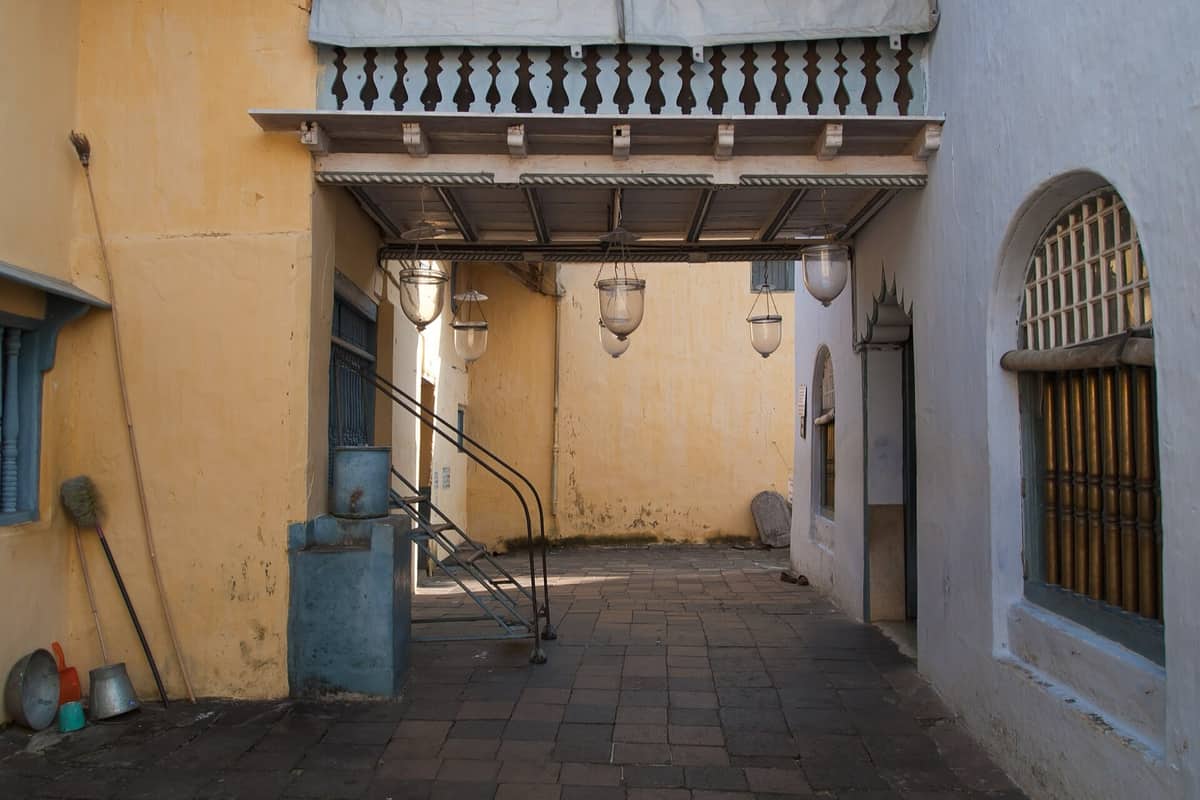
Built in 1568, with hand-painted Chinese floor tiles and Belgian glass chandeliers. The surrounding lanes of Jew Town are full of antique and spice shops.
When you visit: Usually closed on Fridays, Saturdays and Jewish holidays. Shoulders and knees should be covered, and photography inside is not allowed.
Fort Kochi and St Francis Church
Kochi
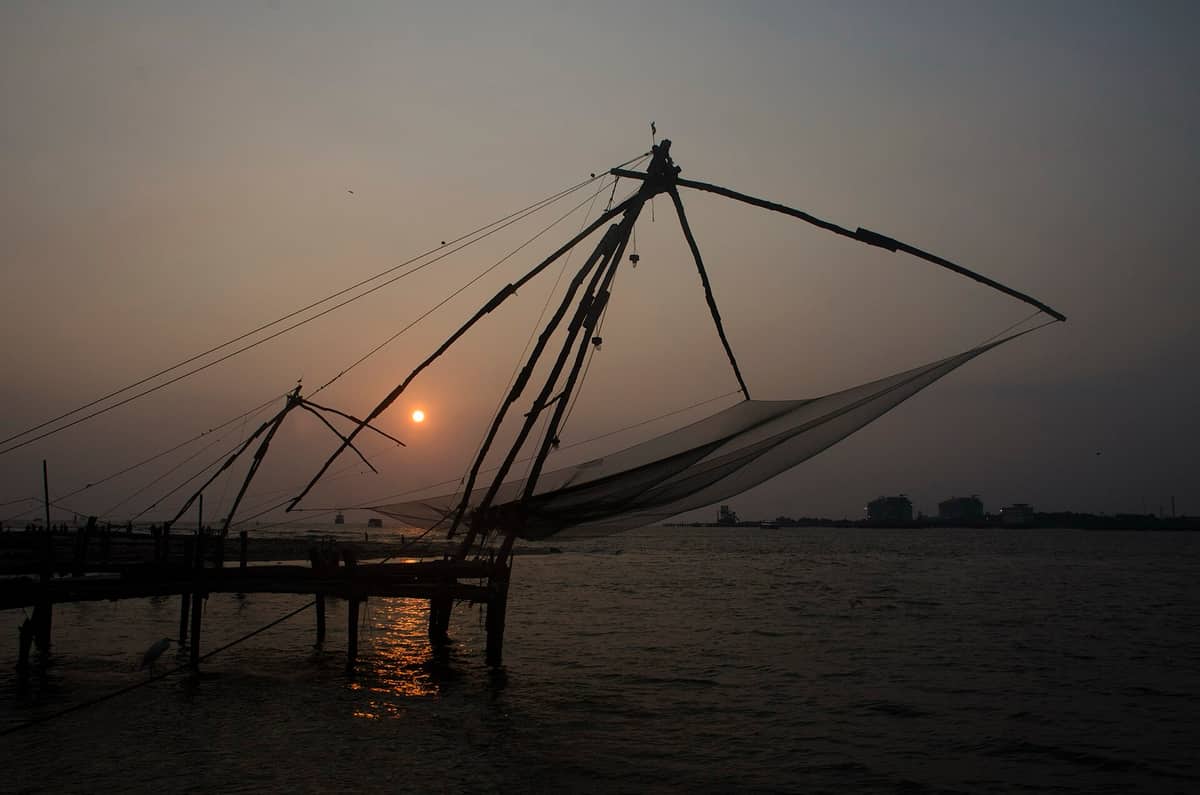
St Francis Church, built by the Portuguese in the early 1500s, is one of the oldest European churches in India; Vasco da Gama was first buried here before his remains were moved to Portugal. The waterfront is famous for its Chinese fishing nets.
When you visit: Best explored on foot or by bicycle, early morning or late afternoon. Watch the fishing nets being worked at sunrise or sunset. The Kochi-Muziris Biennale, a major contemporary art festival, is held here in some years.
Muziris Heritage Project
Kodungallur and North Paravur
A cluster of museums, synagogues, churches, a mosque and archaeological sites telling the story of the ancient port and its trading world.
When you visit: Spread over a wide area, so it is easiest with a car or on a guided boat-and-road tour from Kochi.
Bekal Fort
Kasaragod
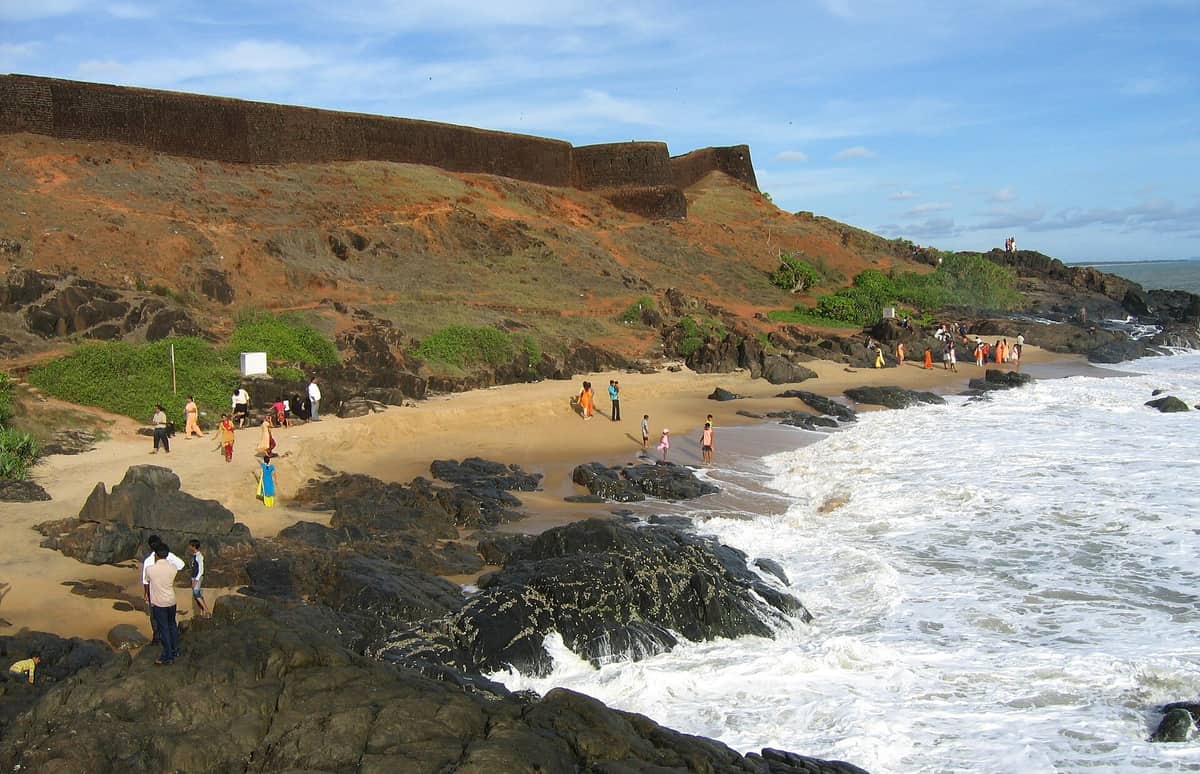
One of the largest and best-preserved forts in Kerala, a 17th-century keyhole-shaped fort jutting into the Arabian Sea, with walkways along its sea walls.
When you visit: Go late in the afternoon for the light and the sea breeze. Combine with the Theyyam season in the north if your dates fall between December and April.
Padmanabhapuram Palace
Thuckalay — in Tamil Nadu, run by Kerala
The old wooden palace of the Travancore kings, with carved ceilings, polished black floors and mica windows. It sits just across the border in Tamil Nadu’s Kanyakumari district, but is owned and looked after by the Government of Kerala.
When you visit: An easy day trip from Thiruvananthapuram. Usually closed on Mondays. Shoes come off at the entrance.
Vadakkunnathan Temple and Thrissur Pooram
Thrissur
An ancient Shiva temple at the centre of Thrissur and the setting for Thrissur Pooram, Kerala’s most spectacular festival, held in April or May with caparisoned elephants, drum orchestras and fireworks.
When you visit: We plan this as a visit from outside: the temple walls and gateways, and the Thekkinkadu Maidan around it where Pooram happens. Pooram draws enormous crowds — book well ahead and expect heat and noise.
Kappad Beach
Near Kozhikode
A quiet beach with a small memorial marking where Vasco da Gama landed in 1498.
When you visit: A short stop rather than a full day. Pair it with Kozhikode’s famous biryani and sweets.
A note on accuracy
This page is a general introduction, not travel advice. Some early history rests on tradition rather than firm records, and temple entry rules, dress codes and opening days can change — check with each site before you go. For visiting etiquette, see Kerala & India rules for visitors.
Sources
- Kerala Tourism — keralatourism.org
- Archaeological Survey of India — asi.nic.in
- Kerala State Archaeology Department — keralaarchaeology.org
- Muziris Heritage Project — muzirisheritage.org
- Government of Kerala — kerala.gov.in